
PrivaSure
- Role
- Product Designer
- Platform
- Web app
- Status
- Shipped
- Industry
- Healthcare
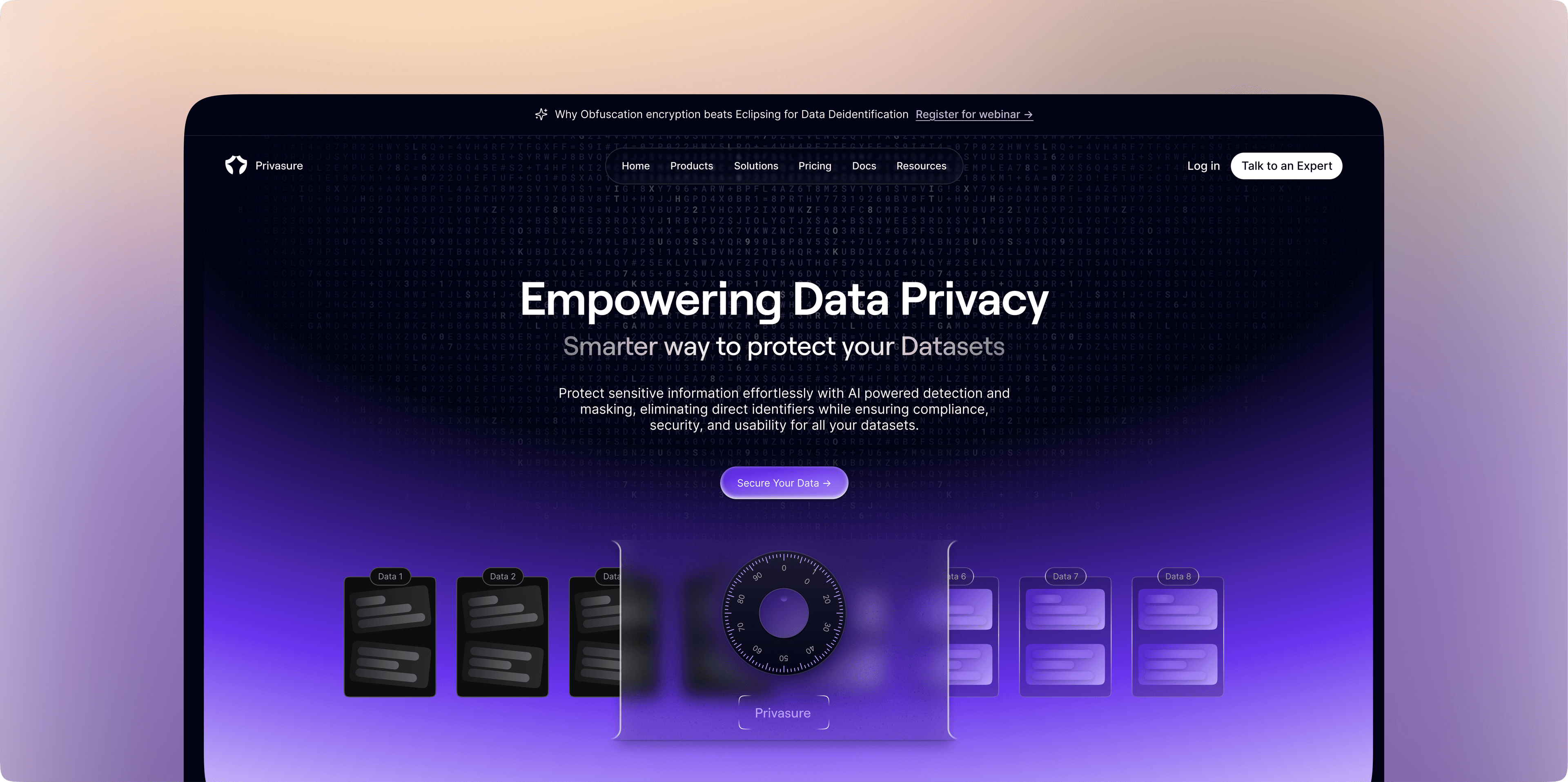
Making Deidentification Auditable, Not Just Automated
PrivaSure is a healthcare data deidentification engine at SynapseHealthTech. Hospitals and research teams upload patient datasets, apply a compliance method, and export data safe enough to share outside the building.
I inherited a tool built for the engineer running the script, and repositioned it around the person who has to sign off on the release. Every masking claim the software makes had to be inspectable on the same screen where it was made.
Deidentification is invisible by nature the work happens in milliseconds and leaves no trace a reviewer can read. The hard part was never hiding that complexity behind a clean summary. It was surfacing enough of it, by default, that “trust me, it’s masked” never had to be the answer.
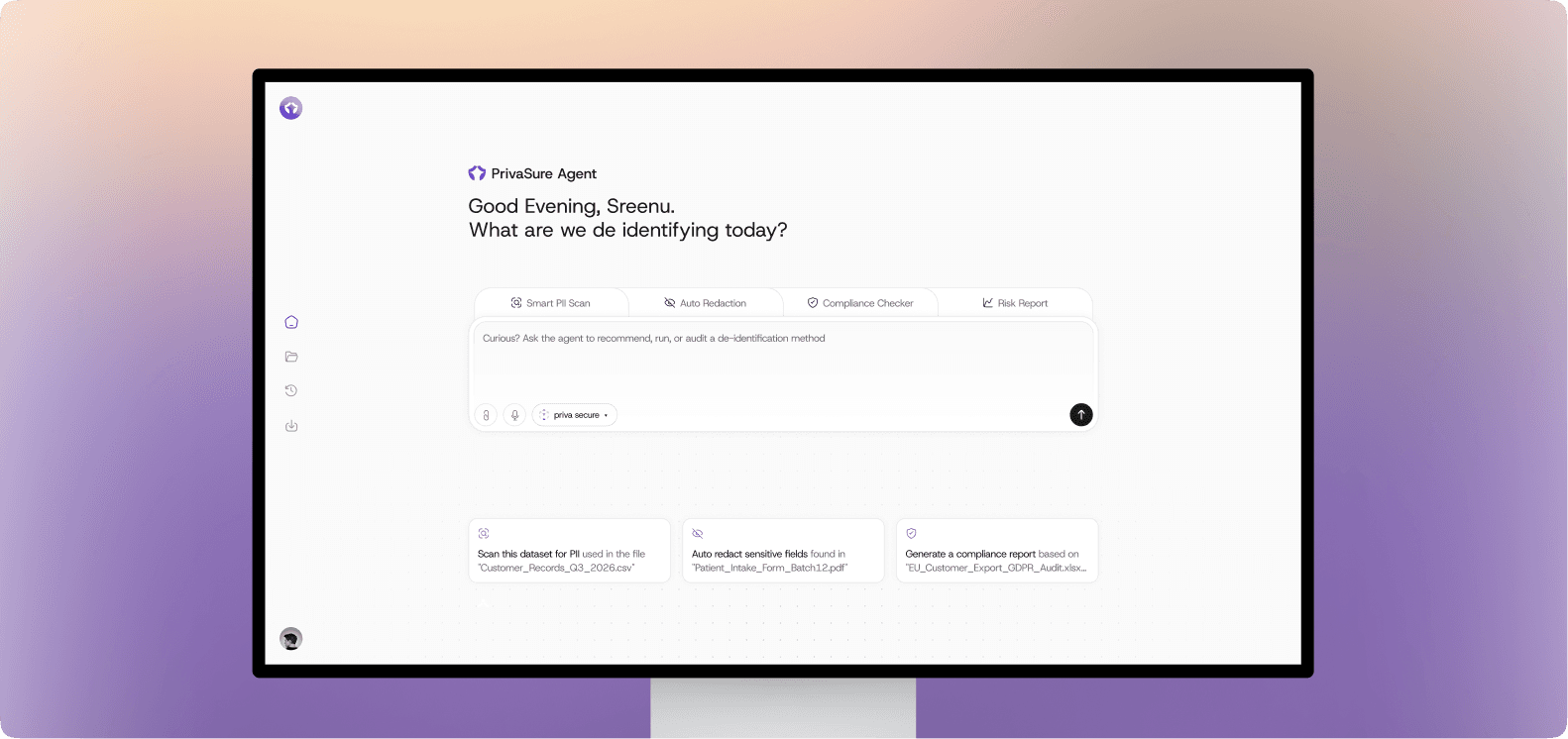
Designing for proof
Deidentification tools are usually built for engineers command line, config files, trust the process. But the person accountable for compliance isn’t always the person running the pipeline.
Trust me, it’s masked doesn’t hold up in an audit. PrivaSure needed an interface for the person who has to sign off, not just the person who ran the scan.
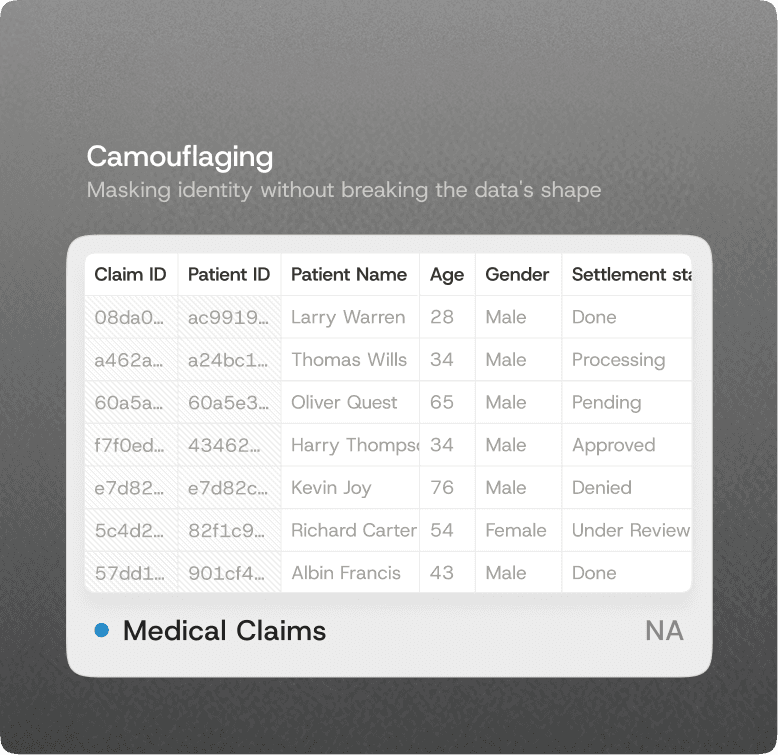
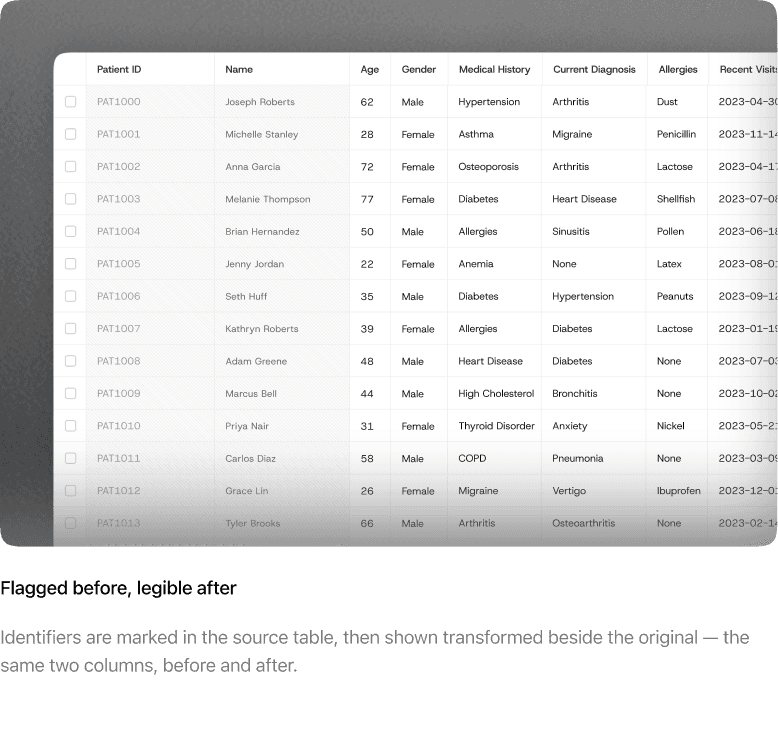
Designing for visibility
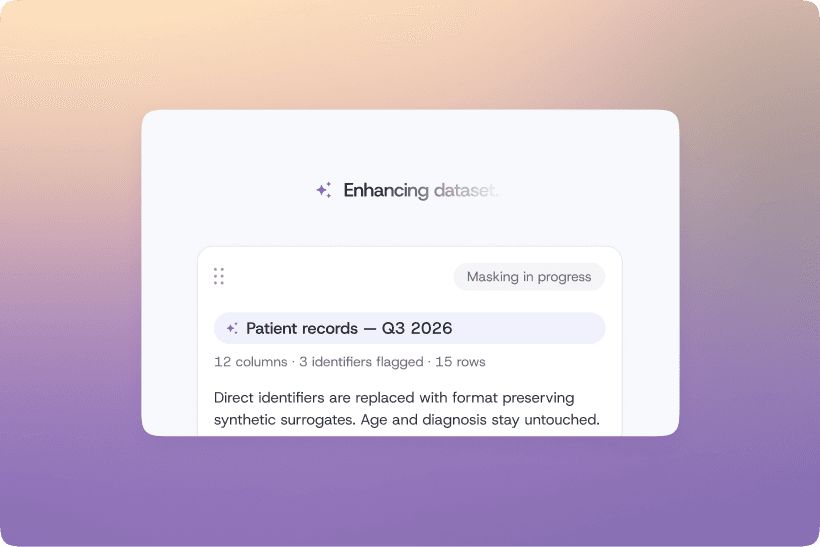
Masking happens instantly and silently under the hood. The design problem was surfacing that process so a non technical reviewer could verify it without reading the rules engine.
Pattern detected fields carry a confidence score instead of a flat pass or fail, so reviewers know where to actually look closer.
Every scan, mask, and export produces a timestamped record built for the moment someone asks ‘prove it’ not as an afterthought log file.
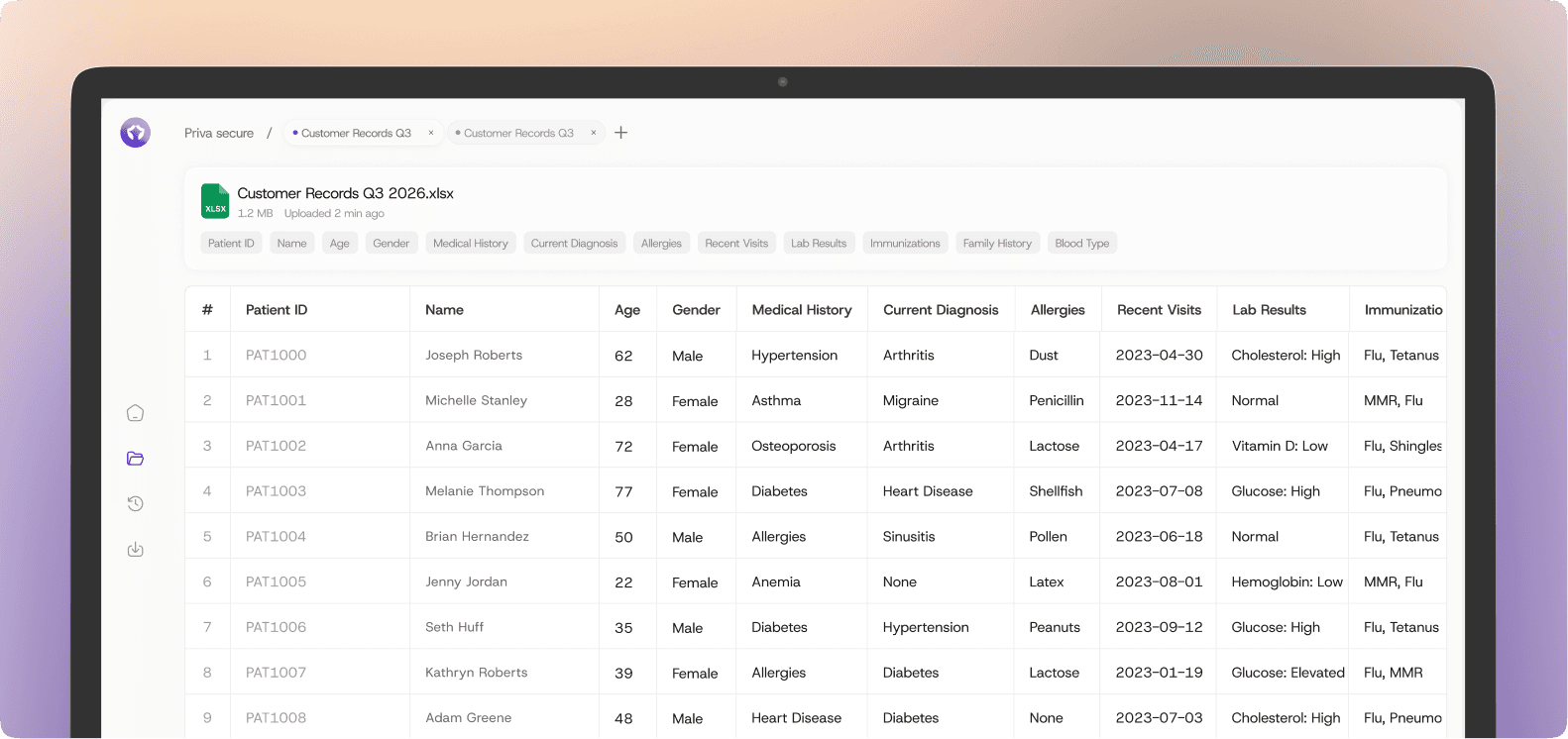
Preview Before You Ship
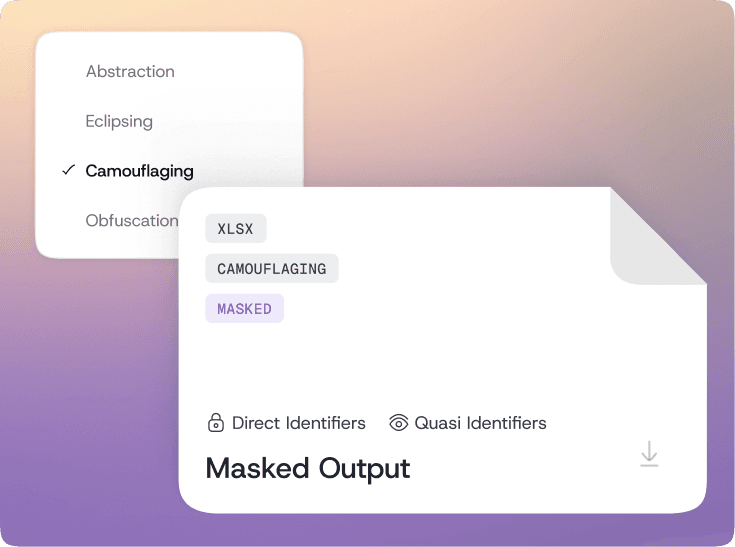
Nothing is undoable once data leaves the platform, so every method shows exactly what you're about to get before you commit.
Conclusions / Learnings
The instinct in enterprise software is to hide complexity behind a clean summary screen. Here, that instinct was wrong the people using PrivaSure weren’t looking for reassurance. They were looking for evidence, and evidence has to be visible, not summarised away.